
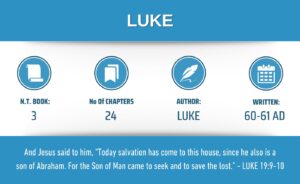
Luke Introduction
Book Title and Author
The Gospel of Luke, the third book of the New Testament, is attributed to Luke, a physician and companion of the Apostle Paul (cf. Col. 4:14; 2 Tim. 4:11; Philem. 24). Though the text does not name its author, early Christian tradition universally affirms Luke’s authorship. Luke is also the author of Acts, and together these two volumes form a unified literary and theological work often referred to as Luke–Acts. His refined Greek style and attention to historical detail suggest he was highly educated and likely a Gentile believer writing to a Gentile audience.
Estimated Date of Writing
The Gospel of Luke is generally dated between AD 60–80. A date in the early 60s is plausible if Acts was written before Paul’s death (c. AD 64–67) and if Luke was completed shortly before it. Others argue for a post-70 date due to Luke’s references to the destruction of Jerusalem (Luke 21:20), which could suggest either prophetic foresight or retrospective knowledge.
Historical Context
Luke writes during a time of expanding Gentile inclusion in the early church, amidst increasing tension between Christians, Jews, and Roman authorities. His Gospel is addressed to “Theophilus” (Luke 1:3), likely a Roman official or benefactor, and aims to provide “an orderly account” to confirm the truth of the Christian message (Luke 1:1–4). This Gospel is particularly attentive to historical and geographical settings, embedding Jesus’ ministry within the wider context of Roman governance, Jewish expectations of the Messiah, and the growing multiethnic nature of the Christian community.
Key Themes and Messages
Luke’s Gospel emphasizes Jesus as the Savior of all people, not only of Israel but also of the Gentiles (cf. Luke 2:32; 3:6). Key theological themes include God’s compassion for the marginalized, including women, the poor, sinners, and outsiders (Luke 1:52–53; 7:36–50; 19:10). Luke highlights the work of the Holy Spirit, prayer, joy, and reversal of human expectations—where the humble are exalted, and the proud brought low (Luke 1:46–55; 14:11). The Gospel is structured around a journey motif, especially Jesus’ deliberate movement toward Jerusalem (Luke 9:51), where He will fulfill God’s redemptive plan through His death and resurrection.
Significant Verses or Passages
- Luke 1:1–4 – Sets the purpose of the Gospel: an orderly, reliable account of Jesus’ life and work.
- Luke 4:18–19 – Jesus’ inaugural sermon quoting Isaiah: “He has sent me to proclaim good news to the poor.”
- Luke 15 – The parables of the lost sheep, coin, and son emphasize God’s joy in redeeming the lost.
- Luke 19:10 – A summary statement of Jesus’ mission: “For the Son of Man came to seek and to save the lost.”
- Luke 23:34, 43 – Jesus’ words from the cross exemplify divine mercy: “Father, forgive them,” and “Today you will be with me in paradise.”
Theological Implications
Theologically, Luke contributes profoundly to our understanding of universal salvation, demonstrating that Jesus is the fulfillment of Old Testament promises for all nations (cf. Luke 2:10–11; 24:47). His emphasis on the Holy Spirit and prayer anticipates the ministry of the church in Acts and underscores the continuity of God’s mission from Israel to the Gentiles. Luke also presents a Christology rooted in both humanity and divinity—Jesus is born of a woman (Luke 2:7), yet is the Son of the Most High (Luke 1:32). His portrayal of God’s kingdom involves both present reality and future fulfillment, characterized by mercy, justice, and reversal of worldly power structures.
Relevance to Modern Readers
Luke’s Gospel resonates deeply with modern readers through its message of hope, inclusivity, and divine compassion. In a fractured and unjust world, Luke presents Jesus as the Savior who reaches across social, ethnic, and economic boundaries. The Gospel’s emphasis on the poor, the outcast, and the repentant challenges cultural norms and invites readers to reflect God’s mercy in tangible ways. Luke also encourages certainty in faith (Luke 1:4) and endurance through hardship, offering a portrait of Jesus that inspires worship, discipleship, and mission.
Summary of the Gospel of Luke
The Gospel of Luke offers an orderly and theologically rich account of the life, ministry, death, and resurrection of Jesus Christ, emphasizing His role as the universal Savior for all people. From its opening chapters detailing the miraculous births of John the Baptist and Jesus to its climactic account of the crucifixion and resurrection, Luke presents Jesus as the fulfillment of God’s promises to Israel and the hope of the nations. Written with precision and compassion, Luke highlights Jesus’ concern for the poor, the marginalized, and the socially excluded, portraying a Savior who brings healing, forgiveness, and restoration. Key events include the parables of the lost (Luke 15), Jesus’ journey to Jerusalem (Luke 9:51), and His resurrection appearances that affirm His victory over death and His commission to preach repentance and forgiveness to all nations (Luke 24:47). The Gospel underscores God’s redemptive plan unfolding through history, culminating in the cross and leading into the mission of the church. With its literary excellence, theological depth, and inclusive message, Luke’s Gospel calls readers to follow the compassionate and righteous King who seeks and saves the lost (Luke 19:10).